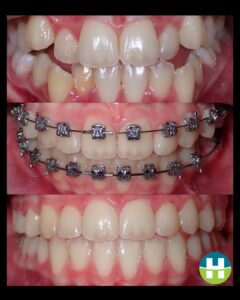
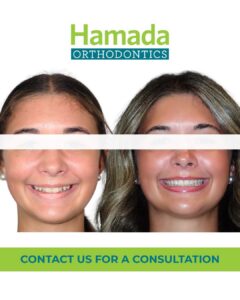
If your child’s teeth don’t line up when they bite down, or you’ve noticed jaw shifting, teeth grinding, or uneven wear on their smile, a crossbite may be the cause. Crossbite treatment in New Orleans is one of the most common reasons families visit Hamada Orthodontics in Metairie, Luling, and Destrehan.
Left untreated, crossbites can lead to jaw pain, facial asymmetry, and breathing problems that affect your child’s sleep, focus, and overall health.
At Hamada Orthodontics, Dr. Allison Hamada takes an airway-centric approach to orthodontics that goes beyond straightening teeth. Because crossbites are often connected to narrow palates and restricted airways, correcting the bite early can improve how your child breathes, sleeps, and grows.
What Is a Crossbite?
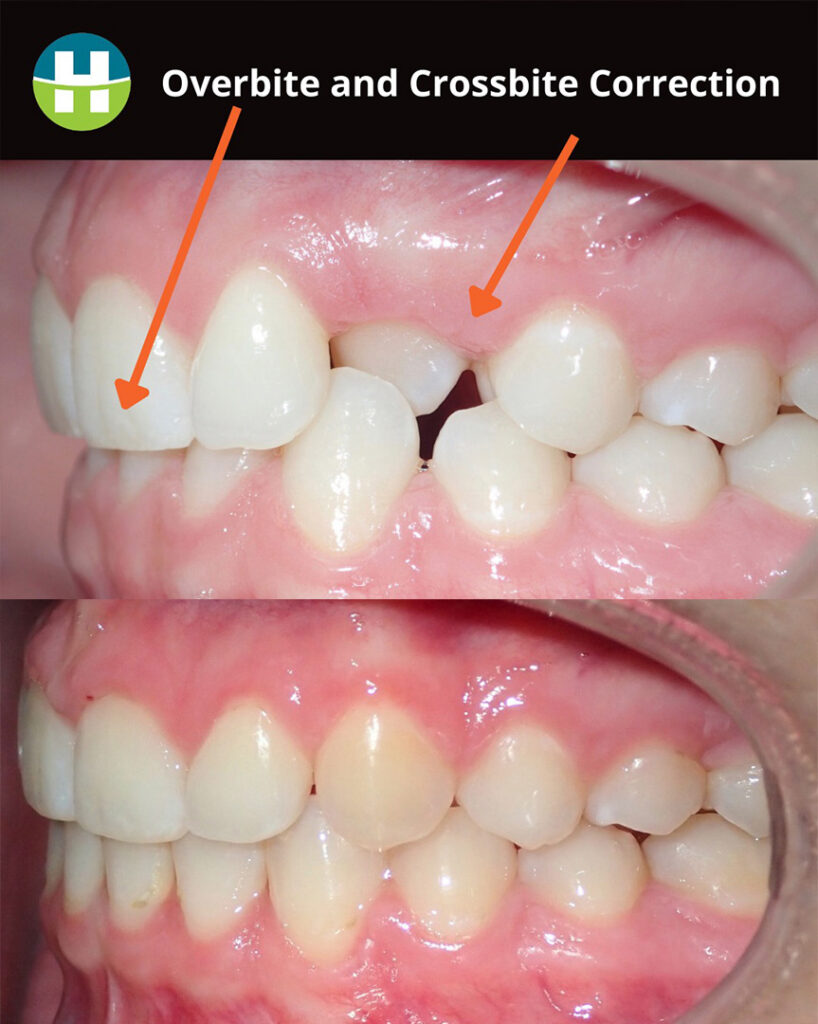
A crossbite is a type of dental misalignment (malocclusion) where the upper teeth sit inside the lower teeth instead of slightly outside them. Think of it this way: in a healthy bite, the upper arch should fit just over the lower arch, like a lid on a box.
When one or more teeth are out of position, that relationship breaks down, and the result is a crossbite.
Crossbites can affect the front teeth, the back teeth, or both. They can involve a single tooth or an entire section of the arch. And unlike many orthodontic issues that are purely cosmetic, crossbites carry real functional consequences — from jaw pain and uneven tooth wear to sleep-disrupted breathing.
Sometimes a Crossbite Is Not the Whole Story
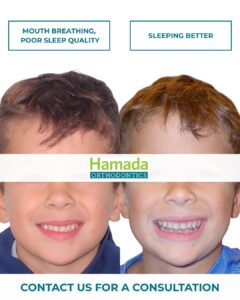
This patient was referred by a pediatric dentist for crossbite evaluation, but the appointment revealed a broader pattern of concerns, including mouth breathing, allergies, snoring, sleep talking, and recurring ear infections. In cases like this, a crossbite may be one piece of a larger jaw development and airway picture.
After starting targeted jaw development treatment, early improvements included better sleep and better nasal breathing. That is one reason early orthodontic evaluation can be so important for growing children.
Types of Crossbite: Anterior vs. Posterior
Understanding the type of crossbite is the first step toward the right treatment plan. The two main categories are anterior and posterior crossbites, and each affects the mouth differently.
Anterior Crossbite
An anterior crossbite occurs when one or more upper front teeth sit behind the lower front teeth. You might notice your child’s smile looks slightly “off,” or that their lower jaw appears more prominent than expected. When all of the upper front teeth are positioned behind the lower teeth, this is commonly referred to as an underbite.
Anterior crossbites can affect chewing, speech, and the long-term health of the front teeth. Because the teeth absorb force in the wrong direction, enamel wear and gum recession can develop over time.
Posterior Crossbite
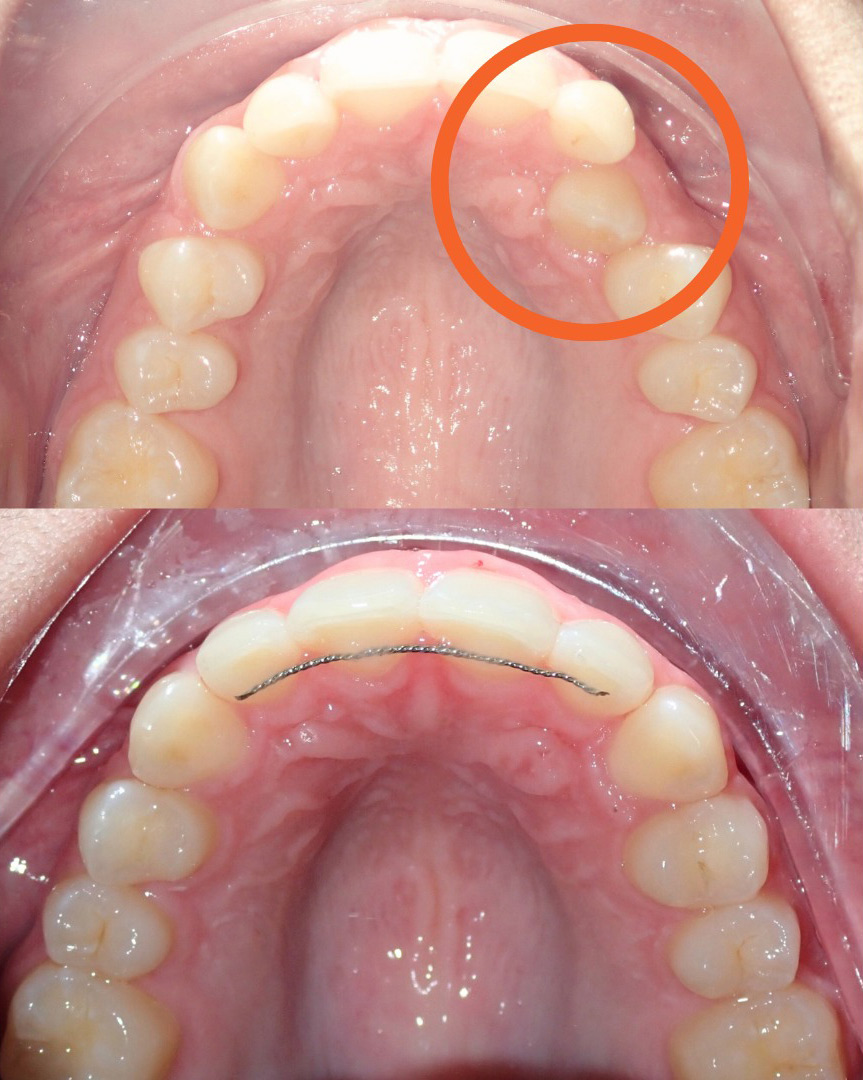
A posterior crossbite affects the back teeth. In this case, the upper molars or premolars bite inside the lower teeth rather than outside them. Posterior crossbites can be unilateral (affecting one side) or bilateral (affecting both sides).
This type of crossbite is especially important to identify early in children because it is frequently linked to a narrow upper jaw. A narrow palate doesn’t just affect the bite — it can restrict the nasal airway, contribute to mouth breathing, snoring, poor sleep quality, and even behavioral symptoms that mimic ADHD.
This is where Hamada Orthodontics’ airway-centric philosophy makes a critical difference. Correcting a posterior crossbite with palatal expansion doesn’t just fix the bite — it opens the airway.
Anterior vs. Posterior Crossbite at a Glance
| Anterior Crossbite | Posterior Crossbite | |
|---|---|---|
| Location | Front teeth (incisors and canines) | Back teeth (molars and premolars) |
| What It Looks Like | Upper front teeth sit behind the lower front teeth | Upper back teeth bite inside the lower back teeth |
| Common Signs | Prominent lower jaw, speech issues, visible misalignment when smiling | Jaw shifting to one side, teeth grinding, mouth breathing, snoring |
| Primary Concern | Enamel wear, gum recession, chewing difficulty | Narrow palate, restricted airway, facial asymmetry |
| Typical Treatment | Braces, clear aligners, or bite pads | Palatal expander, braces, or combined approach |
| Airway Impact | Minimal | Significant — often linked to breathing and sleep issues |
Signs Your Child May Have a Crossbite
Crossbites aren’t always obvious to parents, especially posterior crossbites. But there are signs to watch for:
- Upper and lower teeth don’t line up when biting together
- The jaw shifts to one side when closing the mouth
- Teeth grinding (bruxism), especially during sleep
- Uneven or accelerated tooth wear
- Difficulty chewing or complaints about jaw discomfort
- Mouth breathing or chronic snoring
- Facial asymmetry, where one side of the face looks different from the other
- Speech difficulties, particularly with certain sounds
If you notice any of these symptoms, don’t wait. When airway and jaw development are involved, early evaluation matters. Waiting isn’t neutral — a crossbite can worsen as the jaw grows, and the window for the simplest, most effective treatment doesn’t stay open forever.
What Causes a Crossbite?
Crossbites develop from a combination of genetic and environmental factors. Common causes include:
Genetics and jaw size: A tongue that doesn’t rest in the palate is one of the most common causes. If the tongue is not in the palate, stimulating bone growth, it will stay narrow and vaulted. A crossbite will be the result. The upper jaw (maxilla) is too narrow relative to the lower jaw (mandible), the teeth won’t align properly.
Prolonged thumb sucking or pacifier use: Habits that apply sustained pressure to the palate can narrow the upper arch over time, especially in young children whose bones are still developing. Habits like these are often due to the tongue being unable to stay in the palate.
Mouth breathing: Chronic mouth breathing changes the resting position of the tongue and alters how the jaw grows. Over time, this can contribute to a narrow palate and posterior crossbite. In the Greater New Orleans area, high humidity, seasonal allergies, and elevated mold and pollen levels often lead to chronic nasal congestion — especially in children.
When kids become habitual mouth breathers to compensate, it can reshape how their jaw develops, creating exactly the kind of narrow palate we see in crossbite cases.
This is one reason Hamada Orthodontics evaluates sleep and breathing patterns during every assessment. Learn more about the connection between mouth breathing and your child’s development.
Abnormal tooth eruption: Sometimes teeth simply come in at the wrong angle or in the wrong position, creating a crossbite involving a single tooth or a small group of teeth.
Late loss of baby teeth: When primary teeth are lost too early or too late, the permanent teeth may erupt into misaligned positions.
Why Crossbite Treatment Matters
A crossbite is not something children outgrow. Without treatment, the consequences compound over time:
Jaw pain and TMJ problems. A misaligned bite forces the jaw to compensate, placing uneven stress on the temporomandibular joints. Over time, this can lead to chronic jaw pain, headaches, and TMJ dysfunction. Learn more about the connection between TMJ, grinding, and sleep.
Tooth damage. Teeth that meet incorrectly wear down unevenly. This can lead to chipped enamel, gum recession, and even tooth loss in severe cases.
Facial asymmetry. In growing children, a functional shift caused by a crossbite can influence how the bones of the face develop. The longer a crossbite goes untreated, the more pronounced this asymmetry can become.
Airway and breathing issues. Posterior crossbites associated with a narrow upper jaw can restrict the nasal airway. Children with narrowed airways are more likely to mouth breathe, snore, and experience fragmented sleep — all of which affect daytime behavior, concentration, and academic performance.
How We Treat Crossbites at Hamada Orthodontics
Treatment depends on the type of crossbite, its severity, and the patient’s age. Dr. Hamada creates individualized treatment plans that address not just the misalignment, but the underlying cause — whether that’s a narrow jaw, a skeletal discrepancy, or an airway concern.
Palatal Expanders
For growing children with posterior crossbites, a palatal expander is often the most effective first step. This orthodontic appliance fits against the roof of the mouth and gently widens the upper jaw over several weeks.
Because the mid-palatal suture hasn’t fully fused in children, the jaw can be expanded at the skeletal level — creating lasting changes that correct the crossbite and improve airway space at the same time.
We also have palatal expanders for adults!
Palatal expansion is a cornerstone of Hamada Orthodontics’ approach to growth and development guidance. Learn more about what Metairie parents should know about jaw expansion. It’s most effective in children between approximately ages 5 and 12, while the bones are still developing.
Braces
Traditional metal braces and ceramic braces provide precise, three-dimensional control over tooth movement. For crossbites involving individual teeth or mild misalignment, braces combined with cross-elastics (small rubber bands) can gradually guide teeth into their correct positions.
Clear Aligners
For teens and adults with mild to moderate dental crossbites, clear aligners like Invisalign may be an option.
Aligners work well for cases where the crossbite is primarily dental rather than skeletal, and they offer the convenience of being removable for eating and brushing.
Combined Treatment
Many crossbite cases, especially in children, benefit from a phased approach. Phase 1 treatment might begin with a palatal expander to address the jaw width, followed by braces or aligners in Phase 2 to fine-tune tooth alignment once the permanent teeth have come in.
Surgical Options
In adults with severe skeletal crossbites where the jaw bones have fully fused, orthognathic (jaw) surgery may be recommended in combination with orthodontic treatment.
Dr. Hamada will discuss all available options during your consultation and will always pursue the least invasive approach that delivers the best result.
Crossbite Treatment by Age
The best treatment approach depends on where the patient is in their development. Here’s what crossbite correction typically looks like at each stage.
| Children (Ages 6–12) | Teens (Ages 13–17) | Adults (18+) | |
|---|---|---|---|
| Primary Treatment | Palatal expander (skeletal correction) | Braces, clear aligners, or late-stage expansion | Braces, clear aligners, or surgery for skeletal cases |
| Why This Age | Jaw bones are still growing; mid-palatal suture is unfused | Most permanent teeth are in; growth may still be active | Bones are fully developed; dental correction is primary option |
| Treatment Duration | 3–6 months active expansion + stabilization | 12–24 months | 12–24+ months |
| Airway Benefit | High — expansion widens the nasal airway | Moderate — depends on remaining growth | Limited without surgical expansion |
| Key Advantage | Simplest treatment, greatest skeletal impact | Many treatment options available | Excellent results still achievable at any age |
The American Association of Orthodontists recommends that children have their first orthodontic evaluation by age 7, but if you notice signs of a crossbite — snoring, mouth breathing, teeth grinding, or jaw shifting — before that age, there’s no reason to wait.
In children, the window for skeletal correction with a palatal expander is time-sensitive. What could be a straightforward expansion at age 8 may require significantly more complex treatment at age 15 or 25.
Adults can absolutely achieve crossbite correction. The treatment timeline may be longer, and skeletal expansion may require more advanced techniques, but braces, clear aligners, and when necessary, surgical intervention can produce excellent results at any age.
Crossbite vs. Other Bite Problems
Many patients aren’t sure whether they have a crossbite, overbite, underbite, or open bite. Here’s how to tell the difference.
| Bite Problem | What’s Happening | Where It Occurs | Common Symptoms |
|---|---|---|---|
| Crossbite | Upper teeth sit inside lower teeth (lateral misalignment) | Front teeth, back teeth, or both | Jaw shifting, grinding, uneven wear, breathing issues |
| Overbite | Upper front teeth overlap the lower teeth too much (vertical) | Front teeth | Gum irritation, worn lower teeth, jaw strain |
| Underbite | Lower jaw extends past the upper jaw | Front teeth and jaw | Difficulty biting, speech issues, prominent chin |
| Open Bite | Front teeth don’t touch when the back teeth are closed | Front teeth | Difficulty biting into food, speech difficulties, mouth breathing |
Not sure which applies to you or your child? That’s completely normal. Many patients have a combination of bite issues, and only a clinical evaluation can provide a definitive diagnosis.
Dr. Hamada uses digital imaging and 3D scanning to identify exactly what’s going on and build a treatment plan around your specific needs.
What to Expect at Your Crossbite Consultation
Walking into an orthodontist’s office for the first time can feel uncertain, especially when you’re not sure what’s wrong or what treatment might involve. Here’s exactly what happens when you visit Hamada Orthodontics for a crossbite evaluation.
A conversation, not a sales pitch. Dr. Hamada starts by listening. She’ll ask about the symptoms you’ve noticed, your child’s breathing and sleep habits, and any concerns about jaw development or tooth alignment.
A thorough clinical exam. Dr. Hamada will evaluate how the teeth come together, check for jaw shifting, and assess facial symmetry. She looks at the bite from every angle — not just the teeth, but the jaw, the airway, and how everything functions together.
Digital imaging. X-rays and digital scans provide a detailed picture of tooth positions, jaw structure, and airway space. This is where hidden issues — like a narrow palate affecting breathing — become visible.
A clear explanation of findings. You’ll understand exactly what type of crossbite is present, what’s causing it, and how it may be affecting your child’s health. No jargon, no pressure — just clear information so you can make an informed decision.
A personalized treatment plan. If treatment is recommended, Dr. Hamada will walk you through the options, timeline, and expected outcomes. If early treatment isn’t needed yet, she’ll explain what to monitor and when to return.
Why Families in the Greater New Orleans Area Choose Hamada Orthodontics
Most orthodontists treat crossbites by repositioning teeth. Dr. Hamada treats crossbites by asking a bigger question: why is the bite wrong in the first place?
That question often leads to discoveries about how your child breathes, sleeps, and develops. It’s an approach rooted in Dr. Hamada’s own experience — her daughter Sophia’s struggles with breathing and sleep are what led her to airway-centric orthodontics in the first place.
Families across Jefferson Parish, St. Charles Parish, and the Greater New Orleans metro area trust Hamada Orthodontics because of:
- An airway-first philosophy that connects bite correction to breathing, sleep, and whole-body health
- Advanced diagnostic technology including digital scanning and 3D imaging
- Three convenient locations serving Metairie, Luling, and Destrehan
- Flexible payment plans that make treatment accessible for every family
- A warm, family-friendly environment where kids and adults feel comfortable
Frequently Asked Questions About Crossbite Treatment in New Orleans
How do I know if my child has a crossbite?
Look for signs like teeth that don’t line up when biting together, a jaw that shifts to one side, teeth grinding, or mouth breathing.
A crossbite isn’t always visible to parents, which is why an orthodontic evaluation is so valuable. Dr. Hamada uses digital imaging to identify crossbites and assess how they may be affecting your child’s airway and development.
What happens if a crossbite is left untreated?
An untreated crossbite can lead to uneven tooth wear, jaw pain, TMJ dysfunction, gum recession, and progressive facial asymmetry. In children, it can also restrict airway development, contributing to mouth breathing, snoring, and sleep problems that affect behavior and learning.
How long does crossbite treatment take?
Treatment duration depends on the type and severity of the crossbite. Palatal expansion in children may take 3–6 months of active treatment followed by a stabilization period.
Braces or aligners for crossbite correction typically take 12–24 months. Dr. Hamada will provide a personalized timeline during your consultation.
Can Invisalign fix a crossbite?
Invisalign can correct mild to moderate dental crossbites in teens and adults. However, skeletal crossbites caused by a narrow jaw typically require a palatal expander or other appliances before aligners can be used. Dr. Hamada will recommend the most effective treatment for your specific case.
Is crossbite treatment covered by insurance?
Many dental insurance plans cover a portion of orthodontic treatment, including crossbite correction. Hamada Orthodontics accepts most major insurance plans and offers flexible payment options to help families manage the cost of care.
Does crossbite treatment hurt?
Patients may feel mild pressure after adjustments or when beginning a new phase of treatment. This discomfort is temporary and typically resolves within a few days. Palatal expanders may cause a feeling of pressure in the roof of the mouth, which most children adjust to quickly.
At what age should a crossbite be treated?
If you notice signs like snoring, mouth breathing, teeth grinding, or a jaw that shifts to one side, bring your child in for an evaluation — regardless of age.
The best time to treat a posterior crossbite is often between ages 6 and 12, when the palate can still be expanded at the skeletal level. However, crossbite correction is possible at any age, and adults achieve excellent outcomes with the right treatment plan.
How much does crossbite treatment cost in New Orleans?
The cost of crossbite treatment depends on the type of correction needed. A palatal expander for a child is typically less than a full course of braces or aligners for a teen or adult.
At Hamada Orthodontics, we work with most major insurance plans and offer flexible, low-interest monthly payment options to keep treatment affordable for families across the Greater New Orleans area. Dr. Hamada will review costs and financing during your consultation so there are no surprises.
How is a crossbite different from an overbite or underbite?
An overbite involves excessive vertical overlap of the front teeth, while an underbite occurs when the lower jaw extends beyond the upper jaw.
A crossbite is a lateral misalignment where upper teeth sit inside lower teeth, either in the front (anterior crossbite) or the back (posterior crossbite). Each condition requires a different treatment approach, and some patients have more than one bite issue at the same time.
Three Locations Serving the Greater New Orleans Area
Phone: (985) 725-0509
Hamada Orthodontics | Metairie, LA
123 Metairie Rd, Metairie, LA 70005
Monday–Thursday: 8:00 AM – 4:45 PM
Hamada Orthodontics | Luling, LA
118 Lakewood Dr, Luling, LA 70070
Monday–Thursday: 8:00 AM – 4:45 PM
Hamada Orthodontics | Destrehan, LA
131 Ormond Center Ct, Destrehan, LA 70047
Monday–Thursday: 8:00 AM – 4:45 PM