TMJ & Myofunctional Therapy Care
Medically reviewed by Dr. Allison Hamada, DDS, orthodontist · Last reviewed:
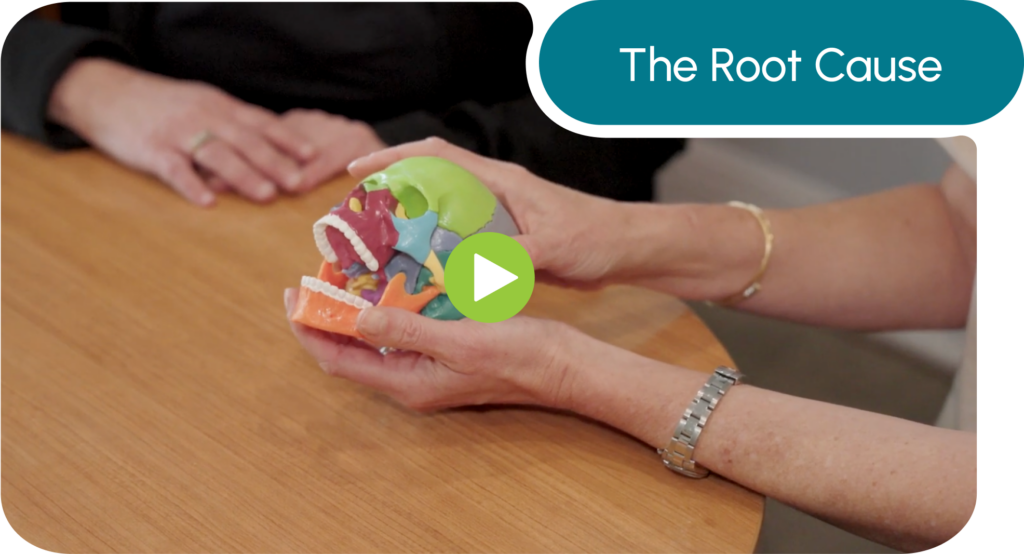
Jaw pain, clenching, morning headaches – many people assume these are just caused by stress. But as we learn more from airway research, how your jaws come together, how your tongue works, and how well you can breathe at night all are heavy contributors to the problem. At Hamada Orthodontics, we don’t just treat the symptoms — we find and fix the root cause of the problem!
If you experience chronic jaw pain, tightness, or facial discomfort, your bite, airway, and muscle function may be contributing factors.
We take a whole-body approach to TMJ health, working to restore balance, improve breathing, and relieve tension—without unnecessary interventions.
Treating TMJ disorder in Metairie, Luling, and Destrehan.
Take This Short Quiz: Do You Have Signs of TMJ Dysfunction?
If you answered ‘yes’ to even one or two of these, it might be time to let us investigate. An imbalance in your jaw, airway, or oral muscles could be behind your pain – and we can help address it.
How We Treat
TMJ & Muscle Dysfunction
We focus on correcting jaw posture, tongue function, and airway health for lasting relief. Our customized treatment plans include:
Airway-Centered Orthodontics
Expanding and aligning the jaws to reduce airway restriction and alleviate tension.
Myofunctional Therapy
We work with therapists who strengthen oral muscles and restore proper tongue posture and nasal breathing.
Skeletal Expansion for Adults & Children
Improving jaw development for better airway space and facial balance.
Collaborative Care with ENTs, Sleep Specialists & Soft Tissue Therapists
Addressing sleep apnea, tongue
restrictions, and posture-related issues.
Why Tongue Function
& Jaw Alignment
Matter


Collaborative Care Approach
Because TMJ disorders, airway issues, and muscle dysfunction involve multiple systems in the body, treatment is often most effective with a team approach. We work closely with:
- ENTs & Sleep Specialists – To diagnose airway-related TMJ problems.
- Myofunctional Therapists – To retrain oral muscles and improve breathing & posture.
- Physical Therapists & Craniosacral Specialists – To address head, neck & posture imbalances.
- General & Restorative Dentists – To ensure bite stability and long-term oral health.
In the end, everything comes back to one thing: lasting relief through comprehensive, airway-focused treatment—so you can breathe, sleep, and live better.
TMJ and myofunctional care in Metairie, Luling and Destrehan
TMJ is the name of the joint itself. You have two, one in front of each ear. When the joint or the chewing muscles around it hurt or stop working smoothly, the problem is called a temporomandibular disorder, or TMD (NIH, NIDCR). Most people just call it TMJ, and so do we.
Here is the good news first. Many cases of jaw pain are short-lived and get better on their own. The National Institutes of Health recommends starting with simple, reversible care, and so do we.
Where an orthodontist helps is with the parts other offices may not check. Dr. Allison Hamada looks at how your jaws fit together, how wide your upper jaw is, where your tongue rests, and how you breathe, awake and asleep. Then she builds a plan with the right people around you. Sometimes that plan is orthodontic. Often it starts with something much simpler.
Who we see for TMJ and myofunctional care
- Adults who wake up with a sore jaw, clench during the day, or get frequent headaches
- People who grind their teeth at night. See our guide on how to stop teeth grinding.
- Snorers who wake up tired and suspect their breathing is part of the story
- Children and teens who breathe through the mouth, push the tongue forward when they swallow, or have a narrow upper jaw
- People with a tongue tie, before or after a release, alongside their therapist
- Adults whose teeth shifted after braces and who want to understand why
Signs to watch for
In the jaw and face
- Pain in the jaw joint or chewing muscles, sometimes spreading to the face or neck
- Jaw stiffness, or a jaw that gets stuck open or closed
- Clicking, popping or grating that hurts
- Ringing in the ears, or a change in how your teeth fit together
One helpful fact: clicking or popping without pain is common and usually does not need treatment (NIDCR). If your jaw locks, or the pain follows an injury, call your doctor or dentist right away.
In the mouth and with breathing
- Lips that rest apart, or breathing through the mouth most of the day
- A tongue that rests low or pushes against the teeth
- Snoring, a dry mouth in the morning, or waking up unrested
- Teeth that keep drifting after orthodontic treatment
What myofunctional therapy is
Myofunctional therapy is like physical therapy for the mouth and face. A trained therapist teaches exercises for the tongue, lips and cheeks. The goals are a closed-lip rest, a tongue that rests on the roof of the mouth, a normal swallow, and easier breathing through the nose.
Cleveland Clinic describes it as therapy for school-age children (age 4 and up), teens and adults. It may help with mouth breathing, tongue thrust, clenching and grinding, and TMJ disorders, and it can support the goals of orthodontic treatment. Treatment often lasts about 6 to 12 months, and it is still a growing area of research (Cleveland Clinic).
We do not hand you a sheet of exercises and wish you luck. We work with trained myofunctional therapists, such as Bloom Therapy Group, a local practice that focuses on this kind of care. Dr. Hamada and your therapist stay in touch, so the muscle work and any orthodontic work move in the same direction.
What a TMJ and myofunctional visit looks like
Your first visit is a free consultation with Dr. Hamada. No referral is needed.
- Your story. When the pain started, what makes it better or worse, how you sleep, and what you have already tried. Bring records or imaging from other providers if you have them.
- A hands-on exam. Dr. Hamada checks how your jaw opens and moves, listens for joint sounds, feels the muscles of the face and neck, and looks at your bite.
- Tongue, lips and breathing. She looks at where your tongue rests, how your lips close, how you swallow, and whether you breathe through your nose.
- Digital records when they help. A 3D scan and digital imaging let us see your bite and jaw in detail.
- A plan in plain words. Often it starts simple. When it helps, we refer you to a myofunctional therapist, an ENT, a sleep specialist, a physical therapist or your dentist, and we coordinate with them.
Treatment options, simplest first
Self-care
For new or mild jaw pain, the NIH suggests soft foods, heat or cold, gentle jaw stretches, and cutting back on habits like clenching, gum chewing and nail biting. Ask your doctor about over-the-counter pain relief. Small changes help more people than you might think.
Myofunctional therapy
When tongue posture, mouth breathing or muscle habits are part of the problem, therapy retrains them. It is gentle, and Cleveland Clinic notes it has no known risks.
A night-time appliance
For some people who clench or grind, a custom appliance worn at night can protect the teeth and ease the load on the jaw muscles. The evidence that appliances relieve TMJ pain is limited, and the NIH advises using one that is not designed to permanently change your bite. Dr. Hamada will tell you whether an appliance makes sense for you and how yours is designed.
Orthodontic care and jaw expansion
We want to be straight with you here. Research does not show that a "bad bite" causes most TMJ problems, and the NIH says there is not enough evidence that changing the bite treats them. So we do not promise that braces, aligners or expansion will cure jaw pain.
What we do is treat a bite, a narrow jaw or an airway problem when it needs treatment for its own sake. Dr. Hamada will explain how that work may also affect how your jaw feels, and we track your symptoms along the way. For adults with a narrow upper jaw, that may mean adult palatal expansion. For children, it may mean a palate expander while they are still growing. For alignment, it may mean braces or Invisalign for adults.
Team care
Jaw pain, breathing and muscle habits overlap, so we rarely work alone. ENTs and sleep physicians handle the medical side of snoring and sleep apnea. Physical therapists help with the neck and posture. Your general dentist keeps an eye on wear and bite stability. Dr. Hamada also founded The Airway Exchange Group, a New Orleans study club where dental and medical providers learn about airway health together.
Why tongue posture matters for kids
In a growing child, the tongue resting on the roof of the mouth helps shape a wide upper jaw. When it rests low, because of mouth breathing, a tongue tie or habit, the jaw can grow narrow and the teeth can crowd. Catching that early is much easier than fixing it later. Our page on facial growth and development guidance explains how we watch for it.
Snoring, sleep and your jaw
Clenching, snoring and waking up tired often show up together. They are worth taking seriously, but they are not a diagnosis. Sleep apnea is diagnosed by a physician, usually with a sleep study. If you snore, we will help you get that checked, and we can talk about how jaw width and position may play a role. Learn more on our sleep and breathing page and our page on snoring in adults.
Where to find us
Dr. Hamada sees TMJ and myofunctional patients at all three offices:
- Metairie: 123 Metairie Rd, Metairie, LA 70005
- Luling: 118 Lakewood Dr, Luling, LA 70070
- Destrehan: 131 Ormond Center Ct, Destrehan, LA 70047
We are open Monday through Thursday, 8:00 AM to 4:45 PM. Call 985-725-0509 to book a free consultation. Looking only for jaw pain care? See our detailed page on TMJ disorder treatment in Metairie.
TMJ and myofunctional therapy FAQs
What is the difference between TMJ and TMD?
TMJ is the jaw joint itself. TMD, or temporomandibular disorder, is the name for problems with that joint or the chewing muscles around it. Most people say TMJ for both.
Can an orthodontist help with TMJ pain?
An orthodontist can look at parts of the picture other offices may not check, like your bite, the width of your jaws, your tongue posture and your breathing. Dr. Hamada starts with simple, reversible care, coordinates with other providers, and recommends orthodontic treatment only when your bite, jaw or airway needs it.
Will braces or Invisalign fix my TMJ?
We cannot promise that. Research does not show that changing the bite reliably treats TMJ disorders. When your bite or jaw needs correcting for its own sake, Dr. Hamada will explain how treatment may also affect how your jaw feels, and we track your symptoms along the way.
Is jaw clicking a sign of a TMJ disorder?
Not on its own. Clicking or popping without pain is common and usually does not need treatment. Clicking with pain, stiffness or locking is worth an exam.
What is myofunctional therapy?
It is a program of exercises for the tongue, lips and cheeks, guided by a trained therapist. The goals are a closed-lip rest, a tongue that rests on the roof of the mouth, a normal swallow, and breathing through the nose.
Who provides myofunctional therapy for your patients?
We work with trained myofunctional therapists, such as Bloom Therapy Group. Dr. Hamada coordinates with your therapist so the exercises support any orthodontic treatment.
How long does myofunctional therapy take?
It depends on the goals. Cleveland Clinic notes that treatment often lasts about 6 to 12 months. Your therapist will set the schedule with you.
Can children do myofunctional therapy?
Yes. It is generally used for children from about age 4, as well as teens and adults, because it requires following directions. Starting while a child is still growing can support healthy jaw development.
Can myofunctional therapy help with snoring or sleep apnea?
It may help some people, often alongside other treatment, and research is ongoing. Sleep apnea needs a diagnosis from a physician. We can help you get evaluated and work with your sleep doctor.
Do I need a referral for a TMJ or myofunctional consultation?
No. You can book a free consultation at our Metairie, Luling or Destrehan office without a referral.
Sources
- National Institute of Dental and Craniofacial Research (NIH). Temporomandibular disorders (TMD).
- Cleveland Clinic. Myofunctional therapy.
- Cleveland Clinic. Mouth breathing.
- Mayo Clinic. Pediatric obstructive sleep apnea.