If your child needs braces in Metairie, you want more than straight teeth — you want a healthier, happier kid. At Hamada Orthodontics, Dr. Allison Hamada takes an airway-centric approach to children’s orthodontics that addresses jaw development, breathing, and sleep quality alongside alignment.
Families across Jefferson Parish, St. Charles Parish, and the Greater New Orleans area choose our practice because we look at the whole child, not just their teeth.
Whether your son or daughter needs early intervention or is ready for comprehensive braces, we’ll build a treatment plan designed around their unique needs.
What You’ll Learn
- What age your child should see an orthodontist
- Types of braces available for kids in Metairie
- How airway-focused orthodontics makes treatment more effective
- What to expect at your child’s first visit
- Cost, insurance, and payment options
When Should Your Child Get Braces in Metairie?
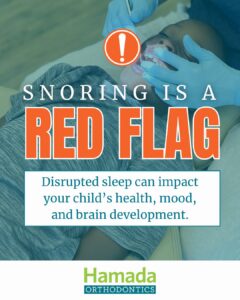
With upwards of 80% of our adult population suffering from some degree of sleep disordered breathing, our goal for your child is jaw optimization. Small jaws are the bottleneck to the airway, so the earlier we help them grow to their optimum size and position, the better their breathing will be. The American Association of Orthodontists recommends that all children be screened by an orthodontist no later than age 7. However, if you’re noticing that your child is experiencing loud breathing, snoring, or sometimes breathes through his or her mouth, it’s never too young to have Dr. Hamada evaluate his or her jaw development.
By evaluating your child while their bones are still developing, Dr. Hamada can identify problems that are much easier — and less invasive — to treat now rather than later.
An early evaluation doesn’t always mean early treatment. Sometimes the best plan is to monitor growth and wait. But when intervention is needed, starting at the right time can prevent more complex procedures down the road, including jaw surgery or tooth extractions.
Signs Your Child May Need Braces
Every child is different, but these are common signs that it’s time for an orthodontic evaluation:
- Crowded, overlapping, or crooked teeth
- Difficulty biting or chewing
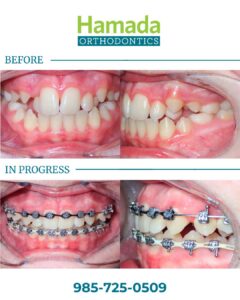
- An overbite, underbite, or crossbite
- Mouth breathing during the day or while sleeping
- Snoring, restless sleep, or waking up tired
- Thumb sucking or tongue thrusting past age 5
- Teeth that don’t come together properly
- Jaw clicking, popping, or pain
- Teeth grinding or clenching during sleep
Some of these signs — especially mouth breathing, snoring, and difficulty focusing — can point to airway issues that braces alone won’t fix. That’s where our approach makes a real difference.
Types of Braces for Kids at Hamada Orthodontics
Metal Braces
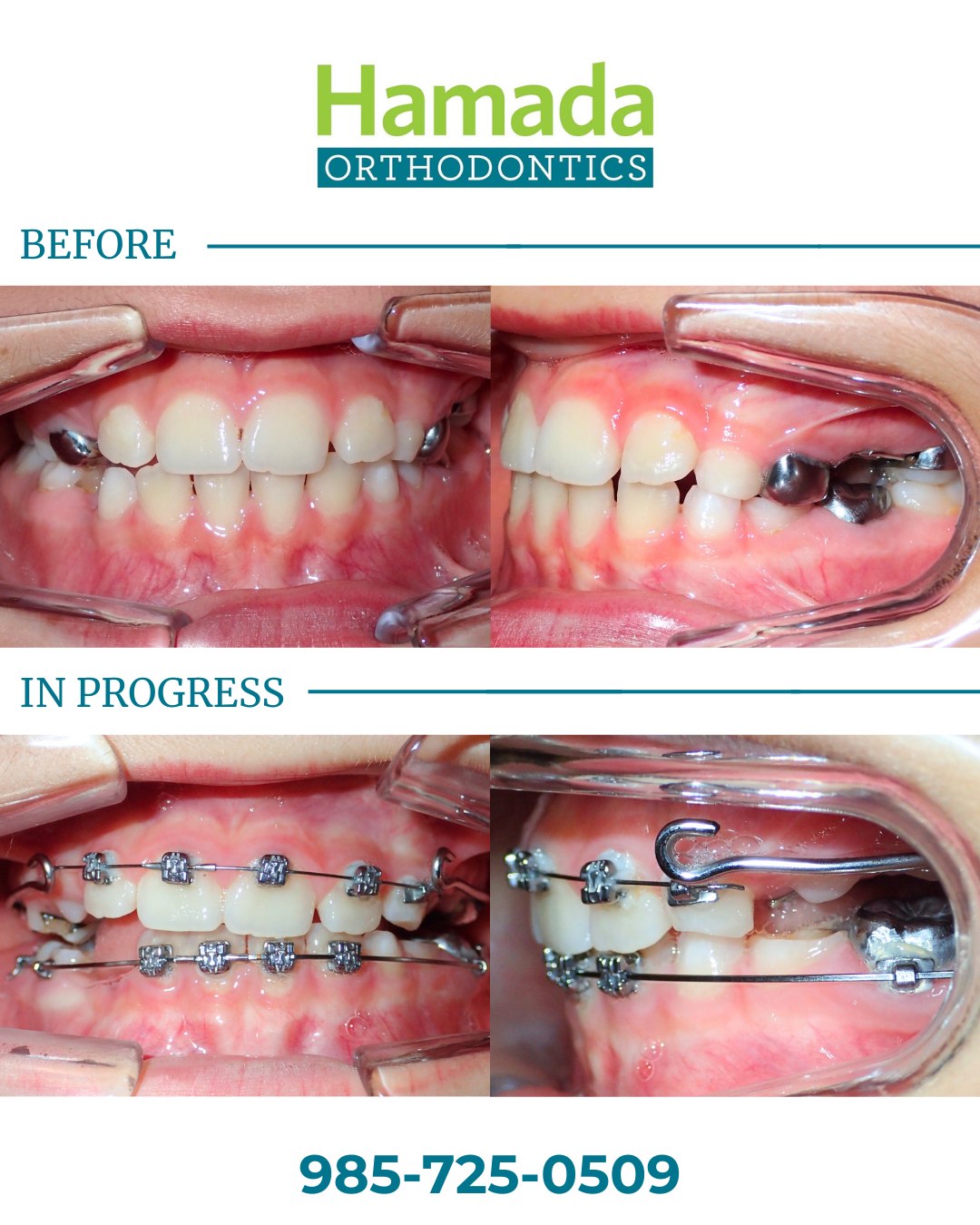
Metal braces are still the most common and effective option for children. They handle complex cases with precision and work around the clock without relying on your child to remember to wear anything. Today’s brackets are smaller and more comfortable than you might remember from your own childhood.
At Hamada Orthodontics, we use Pitts21 brackets — an advanced bracket system designed for broader, more balanced smiles and improved airway outcomes.
Pitts21 brackets work with the body’s natural forces to expand the arch, which not only straightens teeth but can open the airway for better breathing.
Ceramic Braces
For kids and teens who want something less visible, ceramic braces blend with the natural tooth color while delivering the same results as metal brackets. They’re a popular choice for older kids heading into middle school and high school.
Clear Aligners
Depending on your child’s age and the complexity of their case, clear aligners may be an option. Aligners are removable and nearly invisible, but they require discipline — your child needs to wear them 20–22 hours per day. Dr. Hamada will let you know whether aligners or brackets are the better fit during your consultation.
Comparing Braces Options for Kids
| Metal Braces | Ceramic Braces | Clear Aligners | |
|---|---|---|---|
| Best For | Complex cases, all ages | Older kids & teens wanting a subtler look | Mild to moderate cases in disciplined teens |
| Visibility | Noticeable | Blends with teeth | Nearly invisible |
| Removable | ✕ | ✕ | ✓ |
| Compliance Needed | Low | Low | High |
| Handles Complex Cases | ✓ | ✓ | ~ |
| Typical Age Range | 7+ | 11+ | 13+ |
| Treatment Time | 12–24 months | 12–24 months | 12–18 months |
Not sure which option is right for your child? Dr. Hamada will recommend the best approach based on your child’s age, case complexity, and lifestyle during your free consultation.
Palate Expanders
For children with narrow upper jaws, a palate expander may be recommended before or alongside braces. Expanding the palate creates room for permanent teeth, corrects crossbites, and – importantly – opens the airway to improve breathing and sleep. This is one of the most impactful early interventions we provide.
Your Trusted Kids Orthodontist in Metairie
Finding the right kids orthodontist in Metairie means finding someone who understands children — not just teeth. Dr. Hamada has built her practice around pediatric orthodontic care that considers your child’s growth, development, breathing, and behavior alongside their smile.
Every child-focused orthodontic treatment plan starts with a thorough evaluation and an honest conversation about what your child actually needs. Some kids are ready for braces now. Others benefit from monitoring and guided growth.
Either way, you’ll leave our office with a clear understanding of your child’s situation and a path forward you feel good about.
Why Hamada Orthodontics Is Different: Braces That Go Beyond Straight Teeth
Most orthodontic practices focus on alignment. We focus on your child’s overall health.
Dr. Hamada practices airway-centric orthodontics, which means every treatment plan begins with an evaluation of how your child breathes, sleeps, and how their jaw is developing. A narrow jaw doesn’t just crowd teeth — it can restrict the airway, leading to snoring, poor sleep, behavioral issues, and difficulty concentrating in school.
This approach was born from personal experience. Dr. Hamada’s daughter Sophia struggled with restless sleep, anxiety, and chronic health issues that traditional orthodontics didn’t address.
When Dr. Hamada discovered that the root cause was an underdeveloped airway, it changed the direction of her entire practice. Today, every child who walks through our doors receives the kind of thorough evaluation she wishes Sophia had gotten sooner.
“I had a patient, Chloe, who was constantly distracted and struggling in school. Her parents thought she had ADHD. When we evaluated her airway, we found that she wasn’t breathing well at night. After treatment, her sleep, her behavior, and her grades improved — so did her confidence. There was never anything ‘wrong’ with her. She just needed a better airway.” — Dr. Allison Hamada
By addressing jaw growth and development first, braces become more effective, treatment times can be shorter, and the results last longer because we’re treating the cause, not just the symptoms.
We also know that parents want to feel confident their child is comfortable and safe. That’s why we use gentle, growth-based treatment planning, kid-friendly digital scanning technology (no gooey impressions), and bracket systems designed for lighter forces.
And because our practice is boutique-sized, Dr. Hamada personally leads your child’s care at every visit — so you always know who’s guiding their treatment.
What to Expect at Your Child’s First Visit
Step 1: Comprehensive Evaluation
Your child’s first appointment includes a full assessment of their teeth, bite, jaw alignment, and airway. We use iTero 3D digital scanning — no messy impressions — to create a precise digital model of your child’s mouth.
We also screen for breathing issues, tongue posture, and signs of sleep-disordered breathing.
Step 2: Personalized Treatment Plan
After the evaluation, Dr. Hamada will walk you through her findings and recommendations. You’ll understand exactly what your child needs, why it matters, and what the timeline looks like. There’s no pressure — just honest answers and clear options.
Step 3: Treatment Begins
Once you’re ready to move forward, we’ll get your child started. Whether the plan involves braces, expanders, or a combination approach, our team makes treatment day feel easy and stress-free for kids and parents alike.
Step 4: Progress and Adjustments
Your child will visit our office approximately every 6–8 weeks for adjustments. Each appointment is quick and efficient, and our team makes the experience fun and comfortable for kids of all ages.
What Parents Are Saying
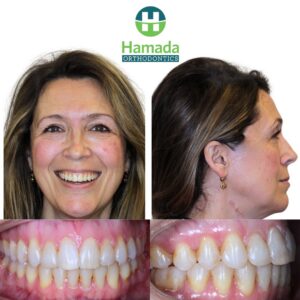
“My granddaughter Hailey didn’t like to smile. When she did, it was always without showing her teeth. She had braces at Hamada Orthodontics and now she can’t stop smiling. Dr. Hamada and her team transferred her smile into a thing of beauty.”
“My child used to snore and woke up exhausted. Since working with Dr. Hamada, he’s sleeping soundly, focusing better, and thriving!”
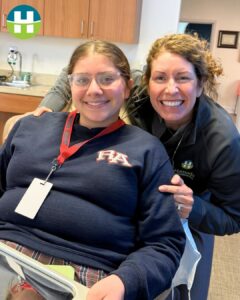
“I absolutely love Dr. Hamada and her staff! Everyone is friendly and welcoming. Both of my kids are being treated and we have had great experiences! They are proactive and communicate your plan in detail.”
“Dr. Hamada and her staff are incredible! They are extremely knowledgeable and thorough in explaining the entire process to myself and my daughter. The way she conducts her practice is phenomenal.”
How Much Do Braces for Kids Cost in Metairie?
The cost of children’s braces in the Metairie and Greater New Orleans area typically ranges from $3,000 to $7,000, depending on the type of braces and the complexity of treatment.
Factors that affect cost include whether your child needs Phase 1 (early) treatment, whether expanders are part of the plan, and the estimated treatment duration.
At Hamada Orthodontics, we believe every child deserves access to quality orthodontic care. We offer flexible payment plans to fit your family’s budget, and our team will help you maximize your insurance benefits.
Most dental insurance plans include orthodontic coverage for children, and we’ll verify your benefits before treatment begins so there are no surprises.
Frequently Asked Questions About Braces for Kids in Metairie
What’s the Best Age for a Child to Get Braces?
The “right” age for braces isn’t the same for every child. The American Association of Orthodontists recommends an initial orthodontic evaluation by age 7—and we agree that’s a helpful general guideline.
But we also believe timing shouldn’t be based on averages alone. Age by itself shouldn’t decide when your child gets help.
If your child is snoring, mouth breathing, grinding their teeth, struggling with sleep, struggling with bed wetting, waiting simply because they’re “not old enough yet” can mean years of unnecessary struggle. And when breathing is involved, waiting isn’t neutral—it affects energy, focus, mood, growth, and overall health.
That doesn’t mean every child needs braces right away. Many don’t. What it does mean is that an early evaluation gives us the opportunity to step in when it actually matters—sometimes well before traditional “braces age”—and create a thoughtful plan that supports your child’s development instead of reacting to problems later.
Some children benefit from early, targeted treatment well before traditional “braces age,” especially when airway development, sleep quality, or breathing patterns are already affected. Others are better served by waiting for comprehensive braces later on. What matters most isn’t how old your child is—it’s recognizing when intervention could make life easier, healthier, and more comfortable sooner, rather than waiting years simply because a certain age hasn’t been reached.
You know your child better than anyone. If something feels off, you don’t have to wait and hope it resolves on its own—especially when something as foundational as breathing and oxygen intake is involved, because that touches nearly every part of your child’s life.
Our goal is simple: help children feel better, sleep better, breathe better, and thrive—at the right time, in the right way, for them.
How long does braces treatment take for kids?
Most children wear braces for 12 to 24 months, though treatment length depends on the severity of the case and how well your child follows care instructions.
Some early intervention cases are shorter, while more complex cases may take longer. Dr. Hamada provides a timeline estimate during your free consultation.
Do braces hurt?
Getting braces placed is painless. Your child may feel some pressure and soreness for a few days after placement and after each adjustment, but this is mild and temporary. Over-the-counter pain relief and soft foods usually help.
Dr. Hamada uses Pitts21 brackets and wires which are designed to be gentler and more comfortable than older systems.
Can my child still play sports with braces?
Absolutely. We recommend wearing a mouthguard during contact sports to protect the braces and your child’s mouth. Dr. Hamada can advise on the best mouthguard options for your child’s specific treatment.
What foods should my child avoid with braces?
Children with braces should avoid hard, sticky, and chewy foods that can damage brackets and wires. This includes things like hard candy, popcorn, ice, caramel, and gum. Our team provides a complete list of foods to enjoy and foods to avoid when treatment begins.
How is airway-focused orthodontics different from regular braces?
Traditional orthodontics focuses primarily on straightening teeth and correcting the bite. Airway-focused orthodontics starts by evaluating how your child breathes, sleeps, and how their jaw is developing.
If airway issues are present, treatment addresses those root causes first — which often means better breathing, better sleep, and more stable orthodontic results. Learn more about our airway-centric approach.
What if my child snores or breathes through their mouth?
Snoring and mouth breathing in children are often signs of a restricted airway, frequently caused by a narrow jaw or underdeveloped midface.
These aren’t issues your child will outgrow — they can worsen without intervention. An airway evaluation at Hamada Orthodontics can determine whether orthodontic treatment can improve your child’s breathing and sleep.
Do you accept dental insurance for children’s braces?
Yes. We accept most major dental insurance plans and will verify your benefits before treatment begins. Our team handles the paperwork so you can focus on your child’s care. We also offer flexible payment plans for families without orthodontic coverage.

Visit Hamada Orthodontics in Metairie, Luling & Destrehan
Find the Hamada Orthodontics location closest to you:
Families throughout Metairie, Kenner, Harahan, River Ridge, Luling, and Destrehan trust Hamada Orthodontics for child-focused care.
Hamada Orthodontics | Metairie, LA
123 Metairie Rd, Metairie, LA 70005
Monday–Thursday: 8:00 AM – 4:45 PM
Hamada Orthodontics | Luling, LA
118 Lakewood Dr, Luling, LA 70070
Monday–Thursday: 8:00 AM – 4:45 PM
Hamada Orthodontics | Destrehan, LA
131 Ormond Center Ct, Destrehan, LA 70047
Monday–Thursday: 8:00 AM – 4:45 PM
Phone: (985) 725-0509
Give Your Child a Healthier Smile — and a Healthier Life
Braces for kids in Metairie shouldn’t just straighten teeth. They should set your child up for better breathing, better sleep, and a lifetime of confidence.
At Hamada Orthodontics, Dr. Hamada and her team are passionate about helping children across the Greater New Orleans area reach their full potential — starting with a healthy smile and a clear airway.
We’re accepting new patients at all three of our locations. Your child’s consultation is free, and there’s absolutely no obligation.