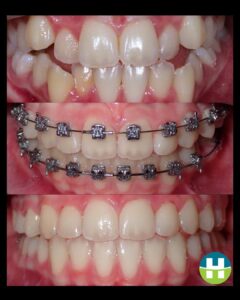
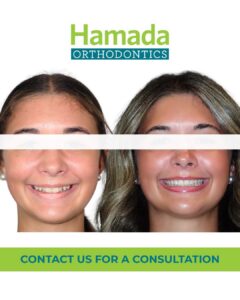
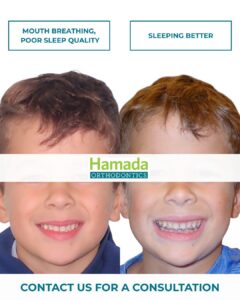
Medically reviewed by Dr. Allison Hamada, orthodontist. LSU School of Dentistry; orthodontic residency, Columbia University. Treating patients in the Greater New Orleans area since 2004.
If you’re researching Invisalign in New Orleans, you’ve probably noticed that every practice website says roughly the same thing: it’s clear, it’s comfortable, it’s convenient. What you actually want to know is whether it works for a case like yours, what it’s really like to live with, and how to choose a provider you can trust. At Hamada Orthodontics, with offices in Metairie, Luling, and Destrehan, we’d rather answer those questions honestly than give you a sales pitch. Here’s what patients ask us every week, and what we tell them.
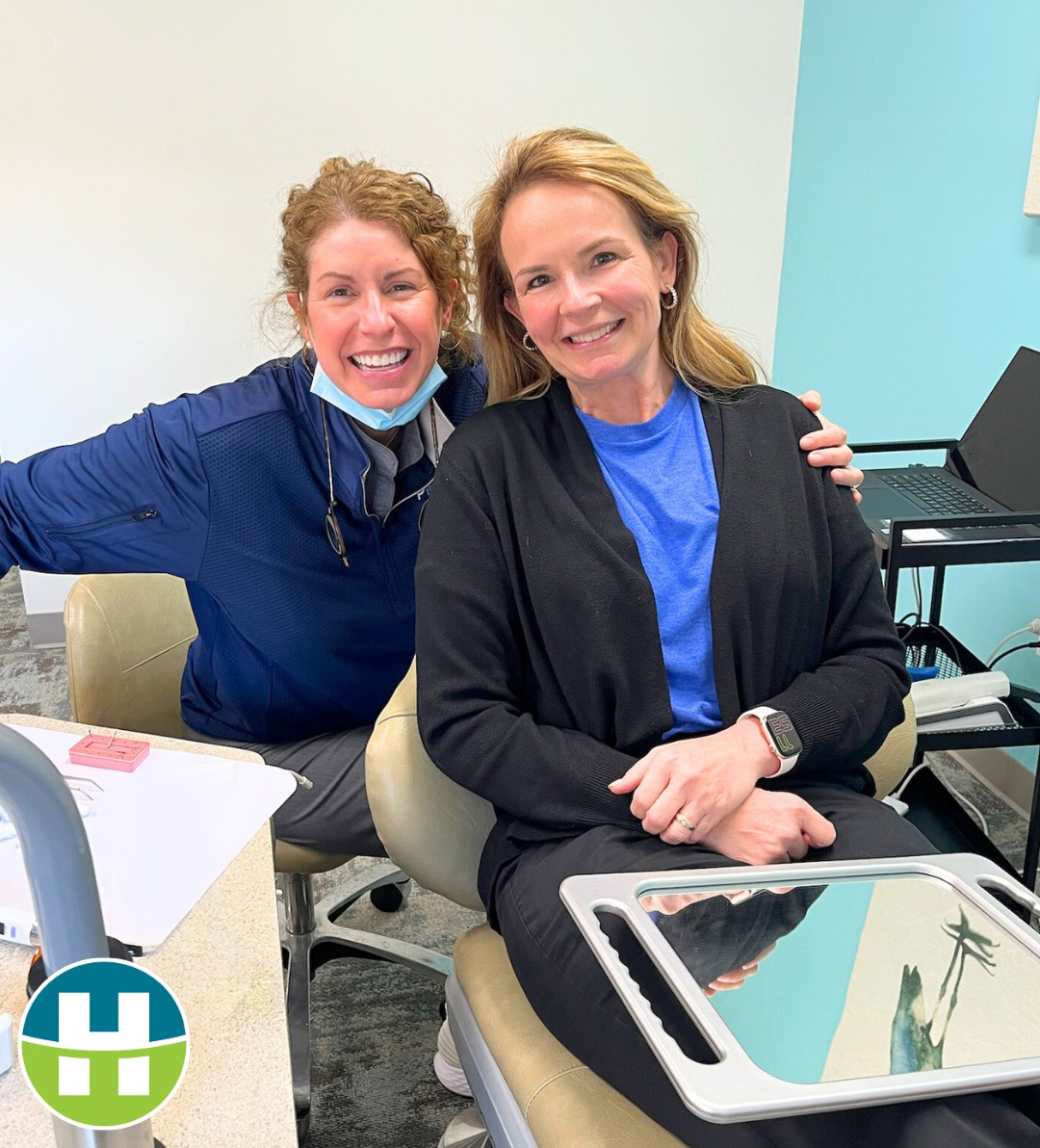
Why Families Choose Hamada Orthodontics
- Orthodontist-led practice
- Treating Greater New Orleans since 2004
- Free consultations
- 3 convenient locations
- 3D digital scans
- Same-day starts available
- Flexible payment plans
What Invisalign Actually Is (And What It Isn’t)
Invisalign moves your teeth with a series of custom clear aligners, sometimes called invisible braces or removable aligners, each one shifting your teeth a fraction of a millimeter closer to their planned position. You wear each set for about a week, then move to the next. The full treatment is mapped digitally before you start, so you can see a preview of your projected result at your first visit. It’s a mature, well-studied treatment: more than 22 million people worldwide have been treated with the Invisalign system.
That’s the part every website tells you. Here’s the part they usually skip.
Invisalign is not a passive product you buy. It’s an active treatment you participate in. The aligners only work while they’re on your teeth, which means 20 to 22 hours a day, every day. Many disappointing Invisalign experiences come down to two things: inconsistent aligner wear, or a treatment plan that wasn’t monitored closely enough to catch problems early. Every case is different, but patient commitment and careful clinical supervision are the two biggest drivers of success.
Both of those things are within your control. That’s good news.
Good to Know
Aligners only move teeth while they’re on your teeth. Plan for 20 to 22 hours of wear per day.
The Things People Wish They’d Known First
We read the same patient forums you do. These are the surprises that come up over and over, so you can hear them from us before you start instead of discovering them mid-treatment.
You’ll probably have attachments. Most Invisalign cases involve small tooth-colored bumps bonded to certain teeth. They give the aligners something to grip so they can handle rotations and vertical movements. With aligners in, they’re subtle. Without them, you can see them if you look. They’re temporary, they come off at the end of treatment, and placing and removing them properly doesn’t damage your enamel. If someone promises you a completely invisible treatment with zero attachments, ask more questions. Wondering whether your teeth would need them? At your free consultation, Dr. Hamada can show you exactly where they would go using your digital treatment simulation.
Refinements are normal, not a failure. Teeth are living things attached to living bone, and they don’t always move exactly as the software predicts. Most patients need at least one round of refinement aligners near the end of treatment to fine-tune the result. A good treatment plan expects this. Before you start at Hamada Orthodontics, we’ll tell you upfront whether refinements are likely in your case and whether they’re included in your treatment fee, so there are no surprises later.
Your coffee habit will change. You can only drink water with aligners in. Anything else, including chewing gum, means taking them out, and every hour they’re out is an hour your teeth aren’t moving. Most patients settle into a rhythm within a couple of weeks, but the adjustment is real, and we’d rather you know that now.
Good news for New Orleans eaters. Unlike braces, aligners come with no food restrictions at all. Crawfish, king cake, corn on the cob at the boil, festival food: it’s all fine, because the trays come out before you eat. The honest flip side is that eating time counts against your daily wear hours, so a long boil or a full festival day takes some planning. Our patients manage it every spring. You will too, and you’ll brush before the trays go back in.
The first few days of each new tray feel snug. That pressure is the aligner doing its job. It’s soreness, not pain, and it fades quickly. Some patients notice a slight lisp for the first day or two. It resolves as your tongue adapts.
Retainers are forever. This is true of braces too. Teeth drift throughout life, and the only way to keep your result is to wear retainers as directed after treatment. Anyone who tells you otherwise is telling you what you want to hear.
If you’ve read all that and you’re still interested, you’re exactly the kind of patient who does well with Invisalign.
Can Invisalign Fix Your Case?
Invisalign has come a long way from its early years, when it could only handle mild crowding. With attachments, elastics, and careful planning, it now treats most crowding, spacing, overbites, underbites, and many crossbites. Dr. Hamada treats a wide range of cases with clear aligners across all three of our offices.
Some bite corrections also use small rubber bands, called elastics, worn along with your aligners. They hook onto the aligners or small attachments and gently guide your upper and lower jaws into a healthier bite relationship. If your plan includes them, you’ll know before you start.
That said, Invisalign isn’t the right tool for every case. Some tooth movements, like rotating rounded teeth or making significant vertical changes, respond more predictably to braces. And when jaw structure itself is the underlying issue, aligners alone won’t address the root cause. The honest answer to “am I a candidate?” requires an exam, not a quiz on a website.
When Invisalign May Not Be Your Best Option
We’d rather tell you this before you spend a dollar. Invisalign may not be the right fit if:
- You already know you won’t wear aligners 20 to 22 hours a day, consistently, for months.
- Your case involves movements that braces perform more predictably.
- You frequently lose removable things like retainers, glasses, or keys. Trays follow the same fate.
- You want a treatment that works without daily participation. Braces work around the clock whether you think about them or not.
None of these make you a bad candidate for orthodontics. They just mean a different tool might get you a better result with less frustration, and we’ll tell you which one at your consultation.
Aligners or Braces: Which Fits Your Life?
Your teeth need an exam. Your routine just needs five quick taps. This won’t tell you if you’re a candidate, but it will tell you what to ask about at your consultation.
Who is treatment for?
On a normal day, could trays stay in for everything except meals and brushing?
What’s in your cup between meals?
How do you do with glasses, keys, and retainers?
What matters most to you?
Here’s what makes that exam different at Hamada Orthodontics.
We Look at More Than Straight Teeth
Most Invisalign consultations answer one question: can we align these teeth? Dr. Hamada asks a bigger one: why are these teeth crowded or shifted in the first place?
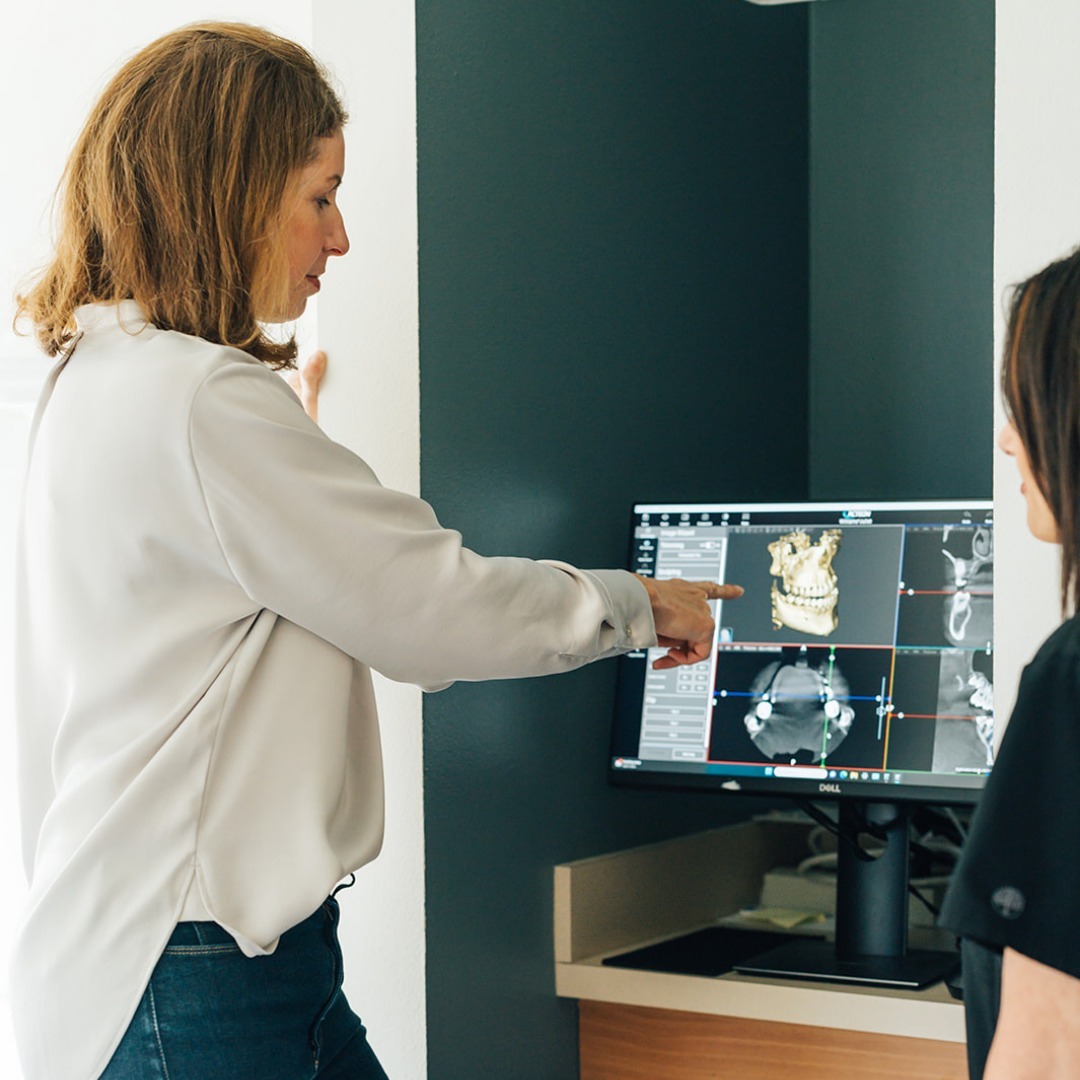
Crowding, narrow arches, and bite problems often trace back to jaw development. That’s why every exam at Hamada Orthodontics evaluates jaw development, bite function, and airway alongside alignment. The American Association of Orthodontists recognizes that orthodontists can play a role in screening for these conditions, and that treatment decisions should be based on the underlying skeletal picture, in collaboration with physicians when breathing concerns are present. That is exactly how Dr. Hamada practices. She identifies skeletal and jaw deficiencies, which can be a contributing factor in snoring and sleep-disordered breathing, and refers to and works alongside medical providers when those signs appear. Diagnosis of any sleep condition stays where it belongs, with a physician.
Sometimes the answer is exactly what you came in for: Invisalign, straightforward case, clear timeline. Sometimes we find something worth addressing first or alongside your aligner treatment, like a bite issue or a structural concern that, if treated, may better support breathing and long-term stability. Either way, you leave your consultation understanding your whole picture, not just a quote.
Watch: why we look past straight teeth
A short clip from our team on jaw position, facial balance, and why straight teeth are only part of the plan.
Watch on FacebookYou can read more about this approach on our airway orthodontics in New Orleans page.
Why See an Orthodontist for Invisalign?
You have options in New Orleans. General dentists offer Invisalign. Mail-order aligner companies will ship trays to your door without anyone ever looking in your mouth. So why choose an orthodontic practice?
Invisalign is a tool, and the result depends on the person planning your case. Orthodontists spend years of additional residency training focused entirely on moving teeth and managing bites. Dr. Hamada completed her orthodontic residency at Columbia University after graduating from the LSU School of Dentistry, and she has been treating patients in the Greater New Orleans area since 2004.
Every Invisalign case here is planned by Dr. Hamada personally. Rather than simply approving software-generated tooth movements, she evaluates bite function, jaw development, facial balance, and long-term stability before a single aligner is made. When your teeth don’t track exactly as planned, and biology means they sometimes won’t, that judgment is what turns a stalled case into a finished smile.
- 2004
- Treating patients in the Greater New Orleans area since
- Columbia
- Orthodontic residency, after the LSU School of Dentistry
Just as important is monitoring. Your aligners are checked against your digital plan at regular visits. If a tooth falls out of track, we catch it in weeks, not months. That’s the piece mail-order aligners can’t replicate, and it’s the difference between a plan on a screen and a result in your mirror.
What Our Patients Say
Families across Metairie, Luling, and Destrehan have trusted Dr. Hamada with their smiles for over two decades. Here’s what they tell us, in their own words.
Watch a smile reveal
The moment a patient sees the finished smile for the first time, filmed in our office.
Watch on FacebookWhat Treatment Looks Like at Hamada Orthodontics
- 1
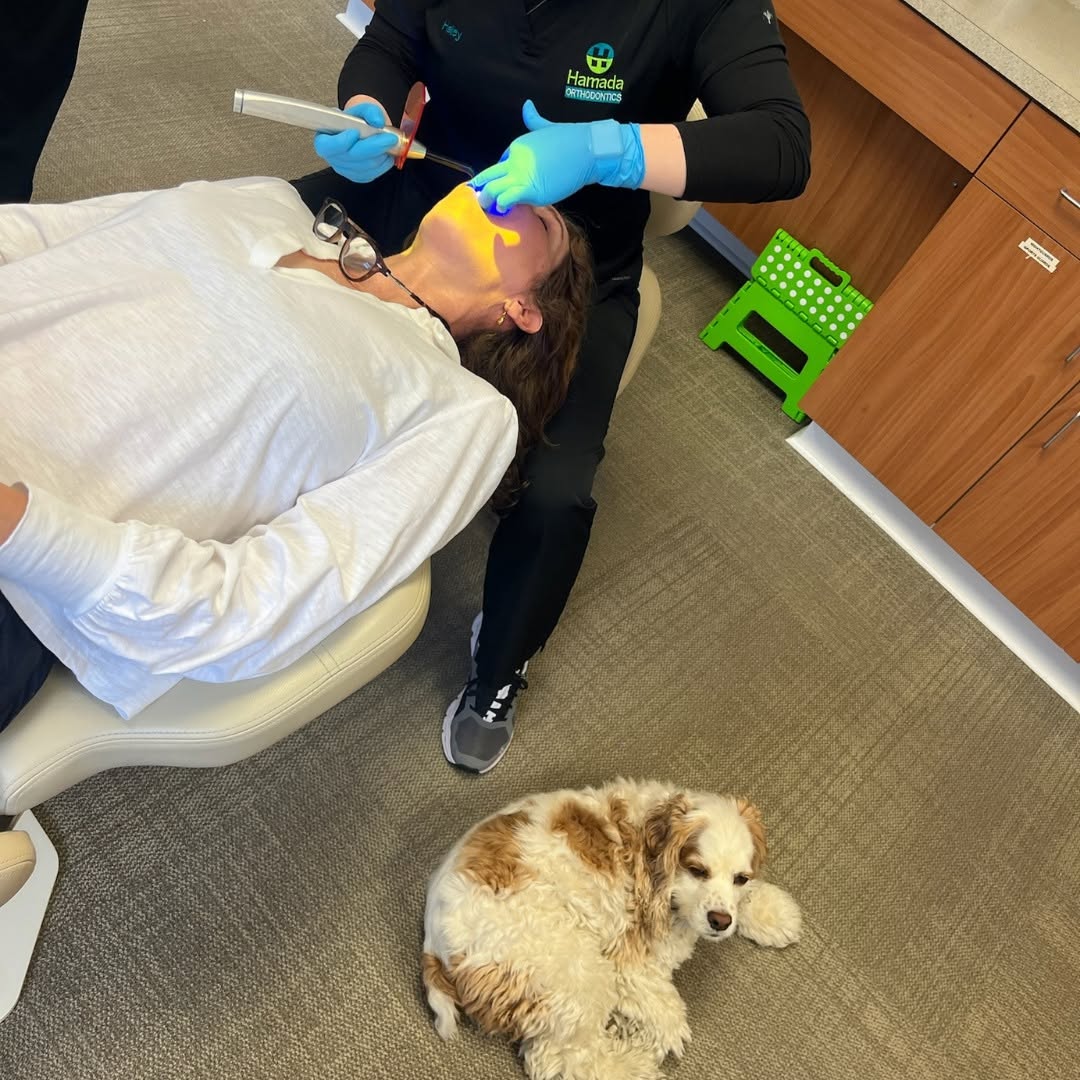
Your free consultation. We take a 3D digital scan of your teeth, no goopy impressions, and Dr. Hamada examines your alignment, bite, jaw development, and airway. You’ll see a digital preview of your projected result and get straight answers about timeline, what your case involves, and whether aligners are truly your best option.
- 2
Same-day starts. If you’re ready to move forward, we can often begin the same day. No second appointment just to say yes.
- 3
Your aligner series. Wear each set as directed, about 20 to 22 hours a day, switching trays on your schedule from Dr. Hamada. Check-ins happen every several weeks so we can confirm your teeth are tracking.
- 4
Refinements if needed. If anything needs fine-tuning near the end, we plan for it. No surprises.
- 5
Retention. You’ll get retainers and a clear plan to protect the result you worked for.
What About Cost?
We’re not going to publish a number, and here’s why: it would be a guess. Invisalign fees depend on the complexity of your case, how many aligners you need, and how long treatment takes. A quote you see online, high or low, tells you nothing about your teeth.
What actually drives the difference? Case complexity. Closing a small gap or fixing mild crowding in front teeth uses fewer aligners over a shorter timeline, so it sits at the lower end of what any practice charges. Correcting a bite, rotating stubborn teeth, or treating both arches over a year or more requires more aligners, more visits, and more planning, which places it at the higher end. Where your case falls is exactly what your free consultation determines.
Where does your case fall? That’s what your free consultation answers.
Beyond that, here’s what we can tell you. Many dental insurance plans cover a portion of Invisalign the same way they cover braces, and our team verifies your benefits for you before you commit to anything. We also offer flexible payment plans so treatment fits a family budget.
For a deeper look at what drives aligner pricing in our area, read our guide to how much Invisalign costs in New Orleans.
Invisalign for Adults, Teens, and Families
Adults are the fastest-growing group of orthodontic patients, and for good reason. Aligners fit a working life: no brackets in client meetings, no food restrictions at dinner with friends. If you’re an adult weighing treatment, our dedicated Invisalign for adults in New Orleans page covers the questions adults ask most, including treating relapse after childhood braces.
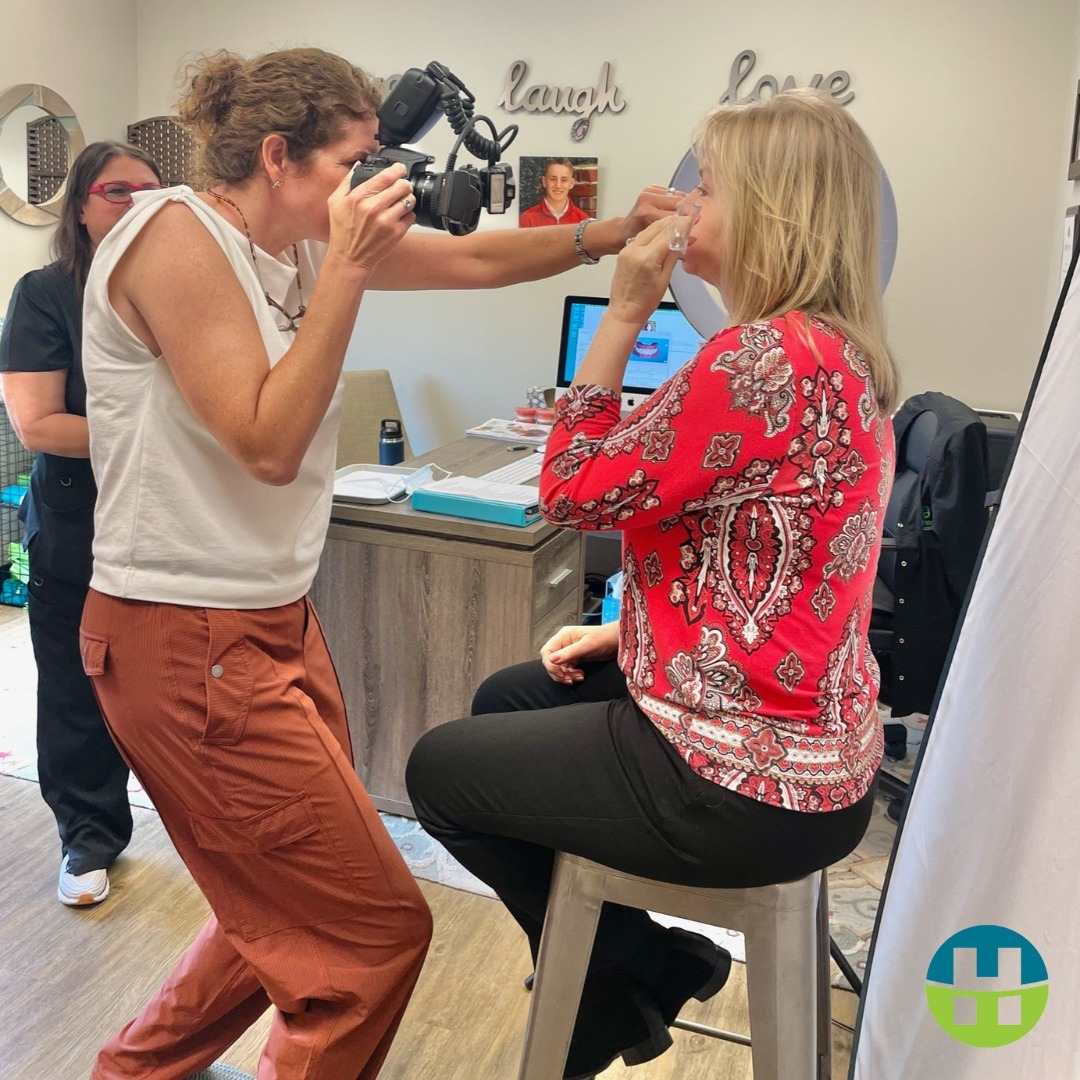
Teens can do well with aligners too, with one honest caveat: compliance. The aligners only work when worn, and a tray sitting in a backpack isn’t moving anything. Modern aligners include wear indicators that let parents and Dr. Hamada see how consistently they’re being used. For responsible teens, aligners can be a great fit around busy Louisiana schedules: they slip out for football, baseball, softball, and soccer mouthguards, and back in after practice, and there are no brackets to fight with a trumpet or clarinet mouthpiece during marching band season. For teens who need more structure, braces may be the more reliable path, and we’ll tell you honestly which we’d recommend for your child.

Have a younger child? Aligners are rarely the starting point for growing kids. If you’re wondering about early treatment, our Phase 1 orthodontics page explains when intervention before the teen years makes sense.
Still deciding between the two? We’ve written about it in depth in clear aligners vs. braces.
Three Offices Serving the Greater New Orleans Area
Hamada Orthodontics serves families across Jefferson and St. Charles parishes with three convenient locations. Our Invisalign patients come from Metairie, Kenner, River Ridge, Harahan, Destrehan, Luling, and throughout the Greater New Orleans area, because specialist orthodontic care shouldn’t require a long drive. All offices are open Monday through Thursday, 8:00 AM to 4:45 PM.
Hamada Orthodontics | Destrehan, LA
131 Ormond Center Ct, Destrehan, LA 70047Mon to Thu, 8:00 AM to 4:45 PMLive closer to one of our offices than downtown? See our location pages for Metairie, Luling, and Destrehan.
Invisalign Questions We Hear Every Week
How long does Invisalign treatment take?
Most Invisalign cases take somewhere between 6 and 18 months, depending on complexity and how consistently you wear your aligners. Simple spacing cases finish faster; bite corrections take longer. At your free consultation, Dr. Hamada gives you a timeline based on your actual teeth, plus the honest caveat that refinements can add a few weeks at the end.
Does Invisalign hurt?
You’ll feel pressure for the first few days of each new tray, which most patients describe as soreness rather than pain. It’s a sign your teeth are moving. Unlike braces, there are no brackets or wires to irritate your cheeks, and most patients adjust to each new set quickly.
Will people be able to tell I’m wearing Invisalign?
At conversation distance, most people won’t notice. The aligners are clear, and the small tooth-colored attachments on some teeth blend in when trays are on. Someone standing very close might spot them. Most of our patients say coworkers and friends had no idea until they mentioned it.
Can Invisalign fix an overbite or crooked teeth?
Yes, in many cases. Modern Invisalign handles crowding, spacing, overbites, and many bite issues using attachments and elastics. Severe cases and certain jaw-related problems may respond better to braces or need a different approach entirely. An exam with Dr. Hamada will tell you which category your case falls into.
Is Invisalign covered by insurance in Louisiana?
Many dental plans with orthodontic benefits cover Invisalign at the same level as braces, though coverage varies by plan. Our front desk team verifies your benefits before you commit, so you’ll know exactly what your plan contributes. We also offer flexible payment plans for the remaining balance.
What makes Invisalign treatment take longer?
The most common reasons are aligners not being worn enough hours, lost trays, teeth falling out of track with the digital plan, delayed appointments, and refinement rounds at the end. Most of these are preventable with consistent wear and regular visits. If you know 20 to 22 hours a day isn’t realistic for you, tell us at your consultation. It’s better to choose braces upfront than to struggle through a treatment that isn’t working.
What happens if I lose an aligner?
Call us, don’t wait. Depending on where you are in that tray’s wear cycle, Dr. Hamada may have you move to your next set early, step back to your previous set to hold position, or order a replacement. What matters is not going days with nothing in, because teeth start drifting quickly and a tray that no longer fits sets your whole timeline back.
Can I whiten my teeth during Invisalign?
Yes, and many patients do, since the trays can double as whitening trays with a product Dr. Hamada approves. The one caveat is attachments: whitening gel doesn’t change the tooth-colored material, so most patients get the best result by whitening after attachments come off at the end of treatment. Ask at your consultation and we’ll map out the right timing for your case.
How do I clean my Invisalign aligners?
Rinse them every time they come out, and brush them gently with a soft toothbrush and clear, mild soap or an aligner cleaner. Never use hot water, which can warp the plastic and ruin the fit, and skip colored mouthwashes and abrasive toothpaste, which stain and scratch the trays. Brushing your teeth before the trays go back in matters just as much, since trapped food and sugar sit against your enamel all day otherwise.
Do I need an orthodontist for Invisalign, or can any dentist do it?
Any provider certified by Invisalign can offer it, but the treatment plan and the monitoring are what determine your result. Orthodontists complete additional years of residency training in tooth movement and bite correction, which matters most when teeth don’t track as predicted. Dr. Hamada has been planning and finishing orthodontic cases in the New Orleans area since 2004.
Will I need to wear a retainer after Invisalign?
Yes, and honestly, forever. Teeth naturally drift throughout life, and retainers are what protect the investment you made. Most patients wear them nightly. We include a retention plan with every case so your results last.
Ready for Straight Answers About Your Smile?
You’ve done the research. You know the trade-offs. The only question left is what treatment looks like for your teeth, and that answer takes about an hour at any of our three offices. Your consultation with Dr. Hamada is free, includes a 3D scan and a full evaluation of your alignment, bite, and airway, and comes with zero pressure. If Invisalign is right for you, we can often start the same day. If it isn’t, we’ll tell you that too. Reach out to our team with any questions before your visit.
This page is for educational purposes and is not a diagnosis or a substitute for an orthodontic exam. Whether Invisalign is right for you can only be determined through an in-person evaluation with Dr. Hamada.